
An hour of joy: how Artscape is transforming the everyday lives of vulnerable children from Ukraine
On 13 July 2022, a group of 30 children with disabilities arrived in Lithuania after a long and carfully planned evacuation from Odesa. Today, 17 of these children remain under the care of the same nurses and educators from Ukraine who have watched them grow since they were infants.
For some time after arriving in Lithuania, they lived in a rehabilitation centre located “almost in the forest”, which functioned similarly to a traditional orphanage. There, the children could enjoy fresh air and the company of deer and rabbits, but they were also isolated from the wider world. When most of them reached the school age, the decision was made to move them to the city. They now live in municipal apartments in Vilnius, in an environment that is closer to family life.
In these homes, the children can now witness the everyday process of running a household. Food and clean laundry no longer simply “appear” out of nowhere, a pot of soup is no longer brought in and then taken away, as it was in their previous institutional life. Instead, they see their caregivers — who work 24-hour shifts — cooking meals, doing laundry and ironing clothes.
The children are encouraged with simple tasks and enjoy preparing salads or making pizza, which helps them understand where food comes from. For example, Dmitrik (8) is fascinated by anything round. He enjoys watching clothes spin through the circular window of a washing machine and actively seeks out balls, grapes, or watermelons just to touch them.
The staff, who were originally nurses and educators in Odesa, have transitioned into roles that are “like mothers” to the children. They provide a team-based form of care, handling everything from medical needs to tucking the children into bed at night.
Viktoria, a speech-language therapist and current caregiver, admits that the children have everything they need physically: “a roof over their heads”, toys, sweets, and plenty of clothes. Yet there is still an emotional void. The children lack a family environment and the deep emotional bonds usually formed with parents.
“No matter how much love and care we give them, they still do not have a family… they do not have these bonds… they continue to live with the hope of meeting someone who will become their family… they seek extraordinary attention and affection from other people, even strangers,” says Viktoria.
This “extraordinary attention” they receive from guests and entertainers from Artscape provides a form of emotional connection and affection that is often missing from their daily lives. “When we tell them that Mark and Mariia are coming today, they become very happy immediately. They clap and shout with excitement,” Viktoria adds.
For children like Maxim (12), a devoted Spider-Man fan who uses a wheelchair, and Nadiia (10), who has speech and hearing impairments and recently received hearing aids that have improved her ability to hear, these visits are the highlight of their week.
Caregivers also emphasise that the visits organised by Artscape are not simply entertainment. They are educational and follow a carefully designed structure that takes into account the emotional and physical needs of children with disabilities.
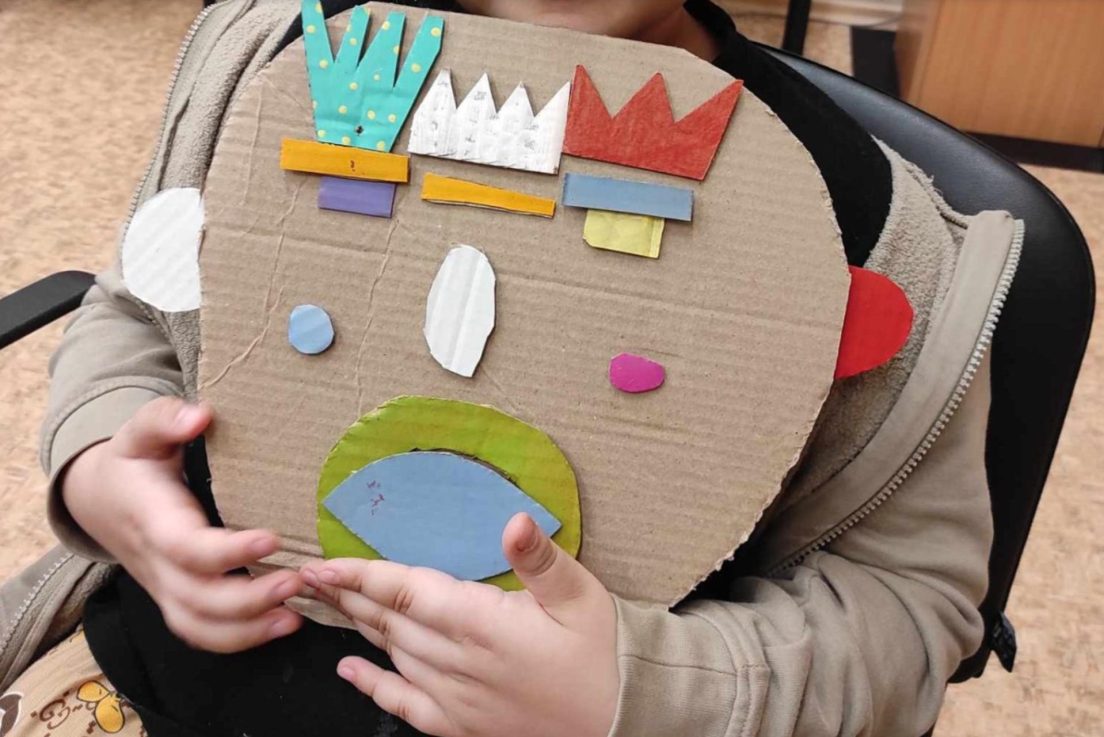
The entertainers do not remain focused on one activity for too long. Instead, they alternate between quiet creative tasks and physical movement. For example, they might spend time drawing or sculpting at a table and then transition into dancing and movement exercises accompanied by music. This cycle of “drawing, dancing, sculpting, and dancing again” helps keep the children engaged without overwhelming them.
This structured approach is important because some of the children can become over-stimulated and enter a state of emotional distress if activities become too intense. The caregivers explain that without a clear structure, the children may struggle to regulate their emotions and find it difficult to calm themselves down. The routine helps to stabilise them emotionally. Focused educational activities also help the children remain grounded. The entertainers provide exercises that require concentration and fine motor skills, such as drawing, gluing, working with clay, or observing magic tricks. These activities help the children focus their attention on a specific task.
By combining these different elements, Mark and Mariia provide what the staff describe as a “fresh cocktail” of stimulation that is both enjoyable and developmentally beneficial for the children.
These visits are also an enormous source of support for the caregivers. As Viktoria says: “I can use this hour to run across the yard and get something done… there is a moment to be by yourself.”
While the entertainers lead activities, the caregivers use that time to complete essential tasks that are difficult to manage while constantly supervising the children. Beyond practical responsibilities, these visits also help prevent burnout by offering a brief pause in a highly demanding routine. One caregiver, Olena, explains that her thoughts are constantly with the war in Ukraine, where her family remains under attack. Having an hour during which the children are engaged with visitors allows the staff a moment to mentally reset.
These visits organised by Artscape bring joy, stimulation, and meaningful emotional experiences to vulnerable children while also providing a vital moment of respite for the women who have become their mothers in exile.
November 11, 2026